The quest for the perfect pair of jeans often leads down a rabbit hole of fabric compositions, weaves, and finishes. While 100% cotton denim has been the undisputed king for decades, a new contender has emerged, promising a blend of sustainability and enhanced performance: Tencel™ Lyocell blends. This deep dive pits these two denim titans against each other, dissecting their performance in drape, softness, and durability, alongside their environmental credentials, to help you make an informed choice for your wardrobe.
The Contenders: Unpacking Tencel Blend vs. 100% Cotton Denim
What is Tencel™ Lyocell? Understanding the Sustainable Fiber
Tencel™ Lyocell, a trademarked Lyocell fiber by Lenzing, is a cellulose fabric derived from sustainably sourced wood, typically eucalyptus. The production process is a closed-loop system, meaning solvents are recycled and reused, significantly minimizing environmental impact. Lyocell fibers are known for their exceptional strength, absorbency, and gentle feel on the skin. When blended with cotton in denim, Tencel™ Lyocell aims to impart superior softness, a beautiful drape, and improved breathability, all while leveraging its eco-friendly origins.

The Classic: All About 100% Cotton Denim
Cotton denim is the archetype of durable, rugged workwear and casual fashion. Its strength lies in its natural fiber structure, which can be woven tightly to create a robust fabric that withstands significant wear and tear. Over time, 100% cotton denim molds to the wearer, developing a unique patina and character. However, conventional cotton farming can be water-intensive and may involve the use of pesticides, raising questions about its environmental footprint. Innovations like organic cotton and recycled cotton are addressing these concerns, but the fundamental properties of pure cotton remain.
Performance Showdown: Drape, Softness, and Durability Compared
Evaluating the Drape: Flow and Movement in Tencel Blends vs. Cotton
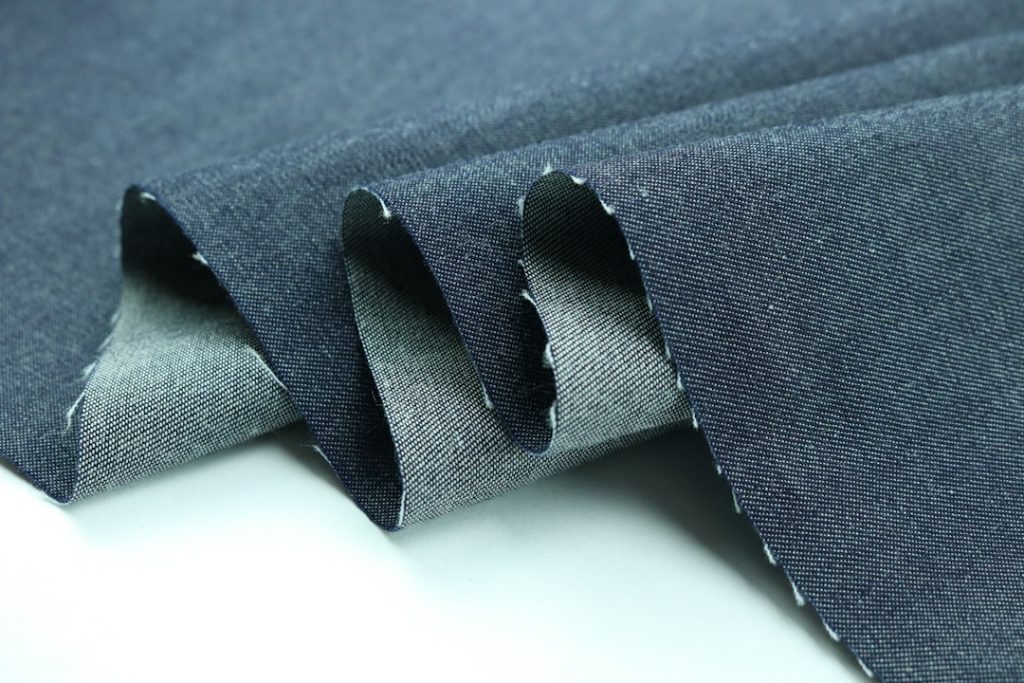
Drape refers to how a fabric hangs and moves. 100% cotton denim, especially heavier weights, tends to be stiffer and can have a more structured, rigid drape. This is often desirable for a classic, form-holding silhouette. Tencel™ Lyocell, on the other hand, possesses a much finer fiber structure and a smoother surface. When blended with cotton, it significantly enhances the denim’s fluidity. Tencel blends exhibit a graceful, almost silky drape, creating garments that move with the body, offering a more elegant and less restrictive silhouette. This makes Tencel blends ideal for styles that benefit from a softer fall, like wide-leg pants or flowing skirts.
Beyond Softness: Tactile Experience and Comfort on Skin
Softness is where Tencel blends often shine brightest. The smooth surface of Lyocell fibers results in a remarkably soft hand-feel, often described as luxurious or silky, even straight off the rack. This contrasts with traditional cotton denim, which typically requires a breaking-in period to achieve a comparable level of softness. For those prioritizing immediate comfort and a gentle touch against the skin, especially in warmer weather due to Lyocell’s moisture-wicking properties, Tencel blends offer a distinct advantage. Cotton denim’s tactile experience can range from crisp and substantial to soft and lived-in, depending on its weight and finish, but the initial softness of a Tencel blend is often unparalleled.

Durability Test: Wear, Wash, and Longevity Insights
When it comes to pure, unadulterated toughness, 100% cotton denim has historically been the benchmark. Its inherent fiber strength and robust weave mean it can withstand abrasion, frequent washing, and heavy use. Properly cared for, a pair of quality cotton jeans can last for years, even decades, developing character with age. Tencel™ Lyocell fibers are also strong, and when blended, they can maintain or even enhance the overall tensile strength of the denim. However, the finer nature of the Lyocell fiber means that very high concentrations in a blend might be more susceptible to pilling or abrasion over extreme, prolonged use compared to a dense, heavy cotton twill. In practical terms, both can be very durable. Tencel blends might show wear differently, potentially maintaining their softness longer, while cotton develops its characteristic wear patterns. For extreme durability demands, like heavy-duty workwear, high-percentage cotton denim might still hold a slight edge, but for everyday wear, the durability of a well-constructed Tencel blend is more than sufficient.
| Feature | Sustainable Tencel™ Lyocell Blend Denim | 100% Cotton Denim |
|---|---|---|
| Drape | Excellent fluid drape, moves with the body | More structured, can be stiffer depending on weight |
| Softness (Initial) | Very high, often silky or luxurious feel | Varies, can be stiff and require breaking in |
| Breathability | High, good moisture management | Good, but can be less breathable in heavier weights |
| Durability (Everyday) | Excellent, maintains integrity well | Excellent, proven long-lasting |
| Durability (Extreme Use) | Good, but high Lyocell content might be more prone to abrasion | Excellent, especially in heavier weights |
| Environmental Impact | Generally lower impact due to sustainable sourcing & closed-loop production | Can be high (water, pesticides), though organic/recycled options exist |
| Care Sensitivity | Can be slightly more sensitive to harsh washing/high heat | Generally robust, but high-quality cotton benefits from careful washing |
Environmental Impact: A Greener Choice?
Sustainability Metrics: Water Usage, Carbon Footprint, and Sourcing
The production of Tencel™ Lyocell is generally considered more environmentally sound than conventional cotton. Lenzing’s Lyocell process uses significantly less water and energy, and the closed-loop system recycles nearly all water and solvents. The wood sourced for Tencel™ is typically from sustainably managed forests. Conventional cotton, conversely, is one of the most water-intensive crops and often relies heavily on pesticides and synthetic fertilizers, contributing to soil degradation and water pollution. While organic cotton dramatically reduces pesticide use and water footprint compared to conventional cotton, Tencel’s production method offers a compelling sustainable alternative with a reduced carbon footprint. For consumers prioritizing eco-conscious choices, Tencel blends present a strong case.

Biodegradability and End-of-Life Considerations
Both Tencel™ Lyocell and cotton are biodegradable cellulose fibers, meaning they can break down naturally at the end of their life cycle, unlike synthetic materials like polyester. This is a significant environmental advantage. Tencel™ fibers are certified as compostable and biodegradable, decomposing back into the environment. Similarly, cotton fibers will biodegrade. When considering the entire lifecycle, the reduced chemical inputs and water usage in Tencel production make its end-of-life scenario even more favorable from an environmental perspective.
Which Denim Reigns Supreme for Your Wardrobe?
Key Differences at a Glance: Tencel Blend vs. Cotton Cheat Sheet
Tencel Blend Denim Pros
- Exceptional softness and smooth feel
- Superior drape and fluid movement
- Enhanced breathability and moisture-wicking
- More sustainable production process
- Biodegradable
Tencel Blend Denim Cons
- Can be more expensive
- May be less resilient to extreme abrasion than heavy cotton
- Care requires a bit more attention to heat and agitation
100% Cotton Denim Pros
- Renowned durability and toughness
- Develops unique character and patina over time
- Wide range of weights and finishes available
- Often more affordable
- Biodegradable
100% Cotton Denim Cons
- Can be stiff and require significant break-in period
- Conventional cotton has a high environmental impact (water, pesticides)
- Drape is typically less fluid
- Can be less breathable in very heavy weights
Choosing Your Perfect Pair: Recommendations Based on Priorities
Your choice hinges on what you value most in your denim. If immediate comfort, a luxurious feel, a graceful drape, and a strong sustainability profile are paramount, then Sustainable Tencel™ Lyocell Blend Denim is likely your winner. It’s perfect for everyday wear, travel, and styles where fluidity and softness are key. Think relaxed-fit trousers, flowy denim skirts, or jeans that feel soft from the very first wear.
If ruggedness, proven longevity for demanding activities, a classic aesthetic, and perhaps a more budget-friendly option are your priorities, then 100% Cotton Denim remains a formidable choice. It excels in situations where robustness is non-negotiable, and the appeal of denim that ages uniquely with you is strong. It’s the go-to for traditional straight-leg jeans, durable work pants, and heritage-inspired styles.

How to Care for Your Tencel Blend and Cotton Denim to Maximize Lifespan
For Tencel Blends: To preserve the softness and drape, opt for cold water washes on a gentle cycle. Avoid high heat in the dryer; instead, hang dry or tumble dry on low. Minimize the use of harsh detergents or bleach. Iron on a low setting if necessary.
For 100% Cotton Denim: For maximum longevity and to retain color, wash in cold water and consider turning jeans inside out. Air drying is best to prevent shrinkage and preserve the fabric’s integrity. If using a dryer, opt for low heat. For raw denim, minimal washing is often recommended to develop its unique patina.
👑 Ultimate Winner: Sustainable Tencel™ Lyocell Blend Denim
For the modern consumer balancing style, comfort, and environmental consciousness, the Tencel™ Lyocell blend emerges as the superior choice. Its unparalleled softness, elegant drape, and inherent breathability offer a tangible upgrade in comfort and wearability over traditional cotton denim, often from the very first wear. Furthermore, its demonstrably lower environmental impact, stemming from sustainable sourcing and advanced closed-loop manufacturing, aligns with the growing demand for eco-friendly fashion. While 100% cotton denim holds its ground in terms of raw durability for extreme tasks, the Tencel blend provides exceptional longevity for everyday use without compromising on comfort or ethical considerations. It represents the evolution of denim into a more sophisticated, comfortable, and responsible textile for the discerning wardrobe.