🧰 Tools & Gear You’ll Need
- High-quality steamer (handheld or garment steamer)
- Ample space for air drying (well-ventilated area, ideally outdoors)
- Odor-absorbing aids (optional but recommended: activated charcoal, baking soda, cedar blocks, coffee grounds in a breathable pouch)
- Stain remover (for pre-treatment, if necessary)
- Soft brush (for minor dirt removal)
Why Your Raw Denim Stinks (And Why Washing Isn’t Always the Answer)
You love your raw denim. That’s a given. The way it molds to your body, the unique fades that tell your story – it’s why you invested in the first place. But let’s be real: raw denim, especially after a prolonged period of wear without a wash, can start to reek. Sweat, body oils, environmental odors, and the general grind of daily life can turn your prized jeans into a walking olfactory hazard. The instinctual reaction? Throw them in the wash. Hold up, soldier. For purists and those looking to preserve the integrity and unique patina of their raw denim, washing is often the last resort. Excessive washing can prematurely fade your jeans, disrupt the indigo, and lead to a generic, washed-out look, erasing the very character you cherish. This guide is about preserving that character while still tackling the funk. We’re talking about a battlefield-tested, no-wash approach that leverages the power of steam and fresh air.
The Science Behind Odor in Raw Denim
Odor isn’t just “funk.” It’s a biological and chemical process. Your body naturally produces oils and excretes sweat. These, combined with environmental pollutants and microscopic bacteria that thrive on your skin and in fabric, create volatile organic compounds (VOCs) – the actual culprits behind bad smells. Raw denim, being unwashed and often densely woven, can trap these elements more effectively than pre-washed jeans. The bacteria feast on body oils and dead skin cells, breaking them down into smelly byproducts. Washing with detergent blasts these bacteria and washes away the odor-causing compounds. But heat and agitation from washing machines can also accelerate indigo loss and create unwanted fading patterns, essentially “sterilizing” the denim’s unique evolution. Our no-wash method aims to neutralize these odor-causing agents without the harshness of traditional laundering.
Gear Up: What You’ll Need for a Refresh
High-Quality Steamer (Handheld or Garment)
This is your primary weapon. A good steamer penetrates the denim fibers, relaxing them and driving out odor molecules. Whether it’s a handheld unit for quick deployments or a full garment steamer, ensure it produces consistent, hot steam. Avoid steam mops or improvisations; the nozzle and heat output need to be suitable for clothing. Look for models with a decent water reservoir so you’re not constantly refilling mid-operation.

Ample Space for Air Drying
Post-steam, your denim needs to breathe. This means a well-ventilated area. Ideally, this is outdoors on a breezy, non-humid day. If indoors, find a spot near an open window or use a fan to circulate air. Direct sunlight can be beneficial for its antimicrobial properties, but be cautious – prolonged, intense sun can sometimes bleach indigo, especially on darker washes. A shaded, breezy spot is often the safest bet for preserving color.

Odor-Absorbing Aids (Optional but Recommended)
Think of these as reinforcements. While steam and air do the heavy lifting, these aids can help capture lingering molecules. Activated charcoal is excellent at adsorption. Baking soda, in an open container or breathable sachet, can neutralize acids. Cedar blocks or shavings lend a pleasant, natural scent and also possess some antimicrobial properties. Coffee grounds (used, dried, and placed in a breathable pouch) are surprisingly effective odor absorbers. The key is to use them during the airing-out phase, allowing them to work in tandem with the fresh air.
Step-by-Step: Refreshing Smelly Raw Denim with Steam & Air
Pre-Steam Inspection: Checking for Stains & Damage
Before you deploy the steam, conduct a thorough inspection. Check for any noticeable stains, particularly grease or food marks. If you find any, spot-treat them *before* steaming. Steam can sometimes set stains, making them harder to remove later. Use a dedicated denim-safe stain remover or a mild detergent solution. Gently work it into the stain with your fingers or a soft brush, then rinse the area thoroughly with cool water. Also, check seams, rivets, and stitching for any signs of wear or damage that might be exacerbated by heat or moisture. Address any loose threads now.

The Steaming Process: Technique for Maximum Odor Elimination
Hang your jeans from a sturdy hanger, ensuring they have enough space around them for steam circulation. If using a handheld steamer, hold the nozzle about 1-2 inches away from the fabric. Work methodically, section by section. Move the steamer in slow, even strokes, covering the entire surface area – front, back, pockets, waistband, and even the inside of the pockets. Pay extra attention to high-odor areas like the crotch, seat, and inner thighs. The goal is to saturate the fibers with steam, not to soak the denim. You want the heat and moisture to penetrate and agitate the odor-causing bacteria and molecules. Don’t rush this. A thorough steaming session can take 10-15 minutes per garment.
Post-Steam Airing: Harnessing the Power of Fresh Air
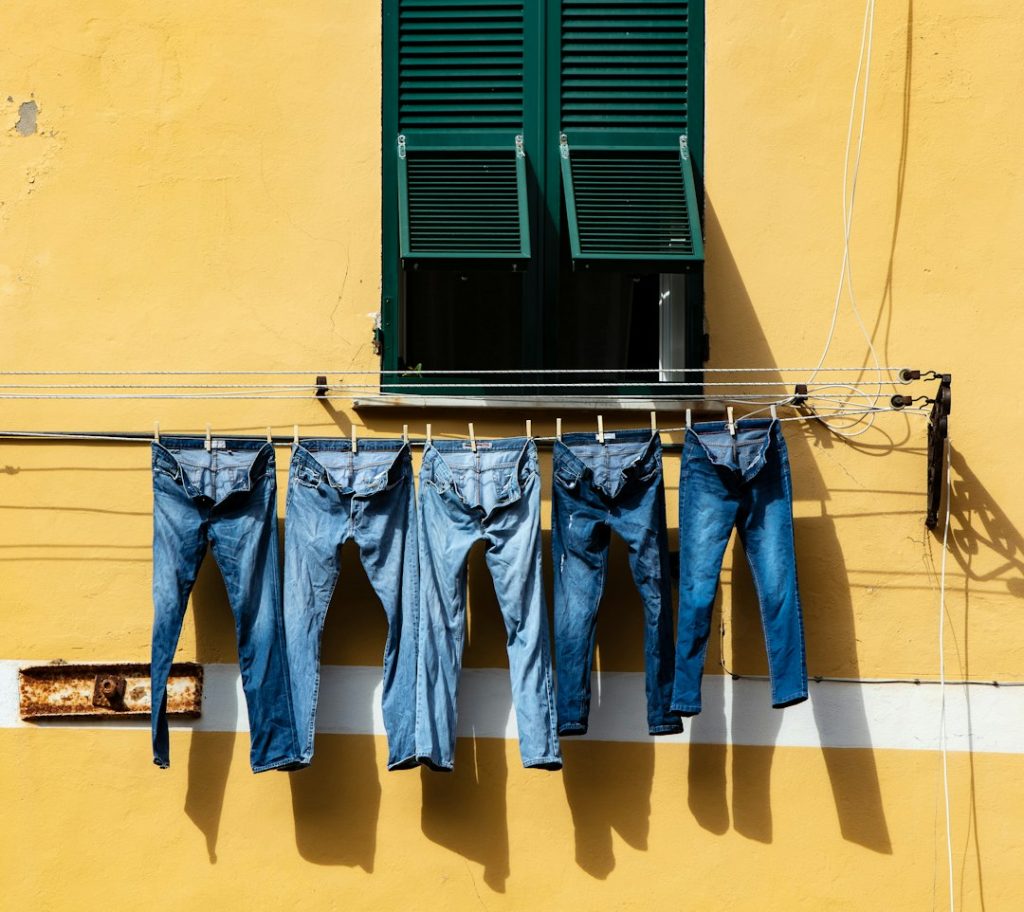
Once steaming is complete, immediately move your jeans to the designated airing spot. Drape them over a clothesline, chair, or hanger. Ensure they aren’t bunched up; maximum surface exposure is key. Fresh air is a powerful deodorizer. As the steam evaporates, it carries away loosened odor molecules. The air circulation helps to flush out any remaining smells and prevents new moisture-related odors from forming. Let them air dry completely. This could take several hours, depending on ambient temperature, humidity, and airflow. Resist the urge to speed this up with direct heat, as that can paradoxically lock in residual odors or cause shrinkage.

Utilizing Odor Absorbers During Airing
If you’re using odor absorbers, place them strategically around the drying denim. For instance, place an open bowl of baking soda or activated charcoal near the jeans, or hang a sachet of cedar chips or coffee grounds alongside them. This creates an environment where the denim is not only airing out but also actively having odor molecules drawn out by these potent absorbers. This is particularly effective if you’re airing indoors or if the outdoor air isn’t particularly fresh.
Troubleshooting Common Issues: Beyond the Basics
Stubborn Odors: When Steam and Air Aren’t Enough
If, after steaming and a full air dry, a faint odor persists, don’t despair. You might need a second round of steaming, focusing even more intensely on problem areas. Alternatively, consider a longer airing period, perhaps overnight in a very breezy location. For truly tenacious odors, a light spray of a diluted fabric refresher specifically designed for odor elimination (test on an inconspicuous area first!) can be used sparingly. Some purists might even consider a carefully controlled soak in a very mild, scent-neutral solution (like a tiny bit of white vinegar diluted in water), followed by thorough rinsing and extended air drying. However, this edges closer to washing and should be a last resort.
Dealing with Wrinkles Post-Refresh
Steaming naturally relaxes fibers, which can lead to some wrinkling. This is usually minor and temporary. Often, simply wearing the jeans for a short period will allow your body heat and movement to smooth them out. If the wrinkles are more pronounced and bothersome, you can use the steamer again, this time holding it slightly further away and using gentle patting or smoothing motions with your hands as you steam. For persistent creases, a *very* low-heat setting on an iron (placed over a thin cloth barrier to protect the indigo) might be used as an absolute last resort, but be extremely cautious. The goal is to preserve the denim’s natural character, not to press it like a dress shirt.
Maintaining Your Steamer for Optimal Performance
A well-maintained steamer is a reliable tool. Always empty the water reservoir after each use to prevent mineral buildup and potential mold growth. Descale your steamer regularly according to the manufacturer’s instructions, typically using a vinegar-water solution. This ensures consistent steam output and prevents any residue from being inadvertently transferred to your precious denim. Check the nozzle for blockages periodically.
How Often Can You Safely Refresh Raw Denim?
This is where judgment and experience come in. Unlike washing, which should be done sparingly (think every 6 months to a year, or even less for some), steam and air refreshes can be performed much more frequently. If your jeans start to smell after a few weeks of hard wear, a steam and air treatment is a perfectly safe and effective way to combat it. You could theoretically do this every couple of weeks, or whenever the odor becomes noticeable. The key is that this process is non-invasive. It doesn’t use harsh chemicals or aggressive agitation. The only real risk is excessive heat or moisture if done improperly, which, as we’ve discussed, is avoidable with careful technique.
Alternatives & Complements to Steam and Air
Spot Cleaning Techniques for Denim
For small, localized stains that appeared between steaming sessions, spot cleaning is your best bet. Use a clean white cloth dampened with a mild detergent solution or a specialized denim cleaner. Gently dab the stain from the outside in to prevent spreading. Rinse the area with a clean, damp cloth, and allow it to air dry. Avoid scrubbing, which can damage the fibers and cause uneven fading.
Freezing Your Denim: Does It Really Work?
As mentioned earlier, the popular advice to “freeze your jeans to kill bacteria” is largely a myth. While freezing can temporarily suppress bacterial activity, it doesn’t eliminate it. Bacteria are resilient and will reactivate once the denim returns to room temperature, often bringing the odors back with them. It’s a harmless method to try if you’re desperate, but don’t rely on it as a primary odor-removal strategy. Steam and fresh air are scientifically more sound approaches.
Extending the Life of Your Raw Denim: A 2026 Perspective
In 2026, the philosophy around raw denim is still about longevity and individuality. The no-wash steam and air method aligns perfectly with this ethos. It’s about responsible ownership – caring for your garment in a way that respects its construction and the journey it’s on with you. Beyond odor control, proper storage (folded or hung in a cool, dry place), avoiding prolonged exposure to harsh chemicals or excessive friction, and treating any damage promptly all contribute to the lifespan of your raw denim. The pursuit of perfect fades shouldn’t come at the cost of a garment that’s falling apart or perpetually smelly. By mastering the steam and air refresh, you’re not just deodorizing; you’re actively participating in the preservation and enhancement of your raw denim’s unique story, ensuring it looks and smells better for years to come, all while avoiding the pitfalls of over-washing.
Related Articles in Care & Sustainability
All Care & Sustainability →